In an increasingly connected world, where smart homes, 4K streaming, and online gaming are the norm, your home network faces unprecedented demands. If your current router struggles with buffering, dead zones, or sluggish speeds, it might be time for an upgrade. A Wifi 6 router represents the latest leap in wireless technology, designed to handle the complexities of modern digital life with superior speed, efficiency, and capacity. This comprehensive guide will navigate you through the world of Wifi 6, helping you understand its benefits, compare top models, and choose the perfect router to revolutionize your home connectivity.
Common Types of Wifi 6 Routers
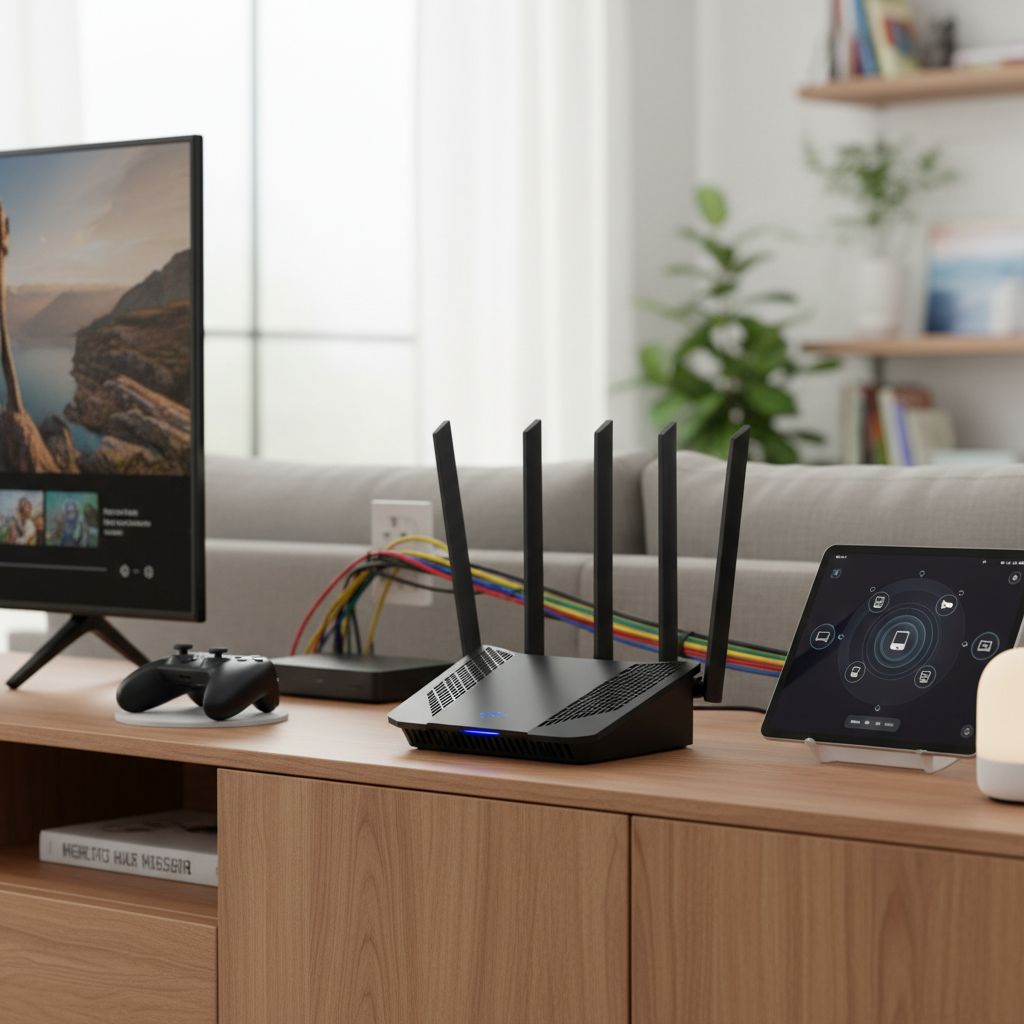
Wifi 6 routers come in various designs and specifications, tailored to different user needs and environments. Understanding these classifications can significantly streamline your selection process, ensuring you find a device that perfectly aligns with your lifestyle.
Phân loại theo nhu cầu sử dụng (Classification by Usage Needs)
The ideal Wifi 6 router largely depends on your specific household demands, from the size of your living space to the intensity of your online activities.
- Routers for Small Homes and Apartments: For compact living spaces or those with fewer devices, entry-level Wifi 6 routers offer excellent value. These models typically provide reliable coverage and speeds sufficient for browsing, streaming, and light gaming. Examples include the TP-Link Archer AX10 and the ASUS RT-AX1800S, which balance performance with affordability.
- Routers for Large Homes and Multi-story Houses: Expanding your network’s reach across multiple rooms or floors often requires a more robust solution. Wifi 6 mesh systems are ideal here, using multiple units to create a unified, strong network signal throughout your entire home, eliminating dead zones. Popular options like the eero 6 or TP-Link Deco XE75 provide seamless coverage for expansive layouts. For premium multi-story coverage, systems like the Netgear Orbi Quad-Band WiFi 6E push boundaries with an additional 6GHz band.
- Routers for Gaming: Gamers demand ultra-low latency, high speeds, and stable connections. Dedicated gaming Wifi 6 routers often feature powerful processors, advanced QoS (Quality of Service) settings to prioritize gaming traffic, and multi-gig Ethernet ports. The ASUS ROG STRIX GS-AX3000, ASUS TUF-AX5400, and the high-end ASUS ROG Rapture GT-AX11000 Pro are prime examples, engineered to give you a competitive edge.
- Routers for Small Offices: Small office environments benefit from routers that offer robust security features, reliable performance for multiple users, and advanced network management tools. The ASUS ExpertWiFi EBR63, for instance, is designed for professional users, offering business-grade features like VLAN support and robust VPN options.
|
Our Picks for the Best Wifi 6 router in 2026
As an Amazon Associate I earn from qualifying purchases.
|
||
| Num | Product | Action |
|---|---|---|
| 1 | TP-Link Smart WiFi 6 Router (Archer AX10) – 4 Gigabit LAN Ports, Dual Band 802.11AX Router, Beamforming, OFDMA, MU-MIMO, Parental Controls, Dual-Core 900MHz Processor, Works with Alexa |

|
| 2 | TP-Link AX5400 WiFi 6 Router (Archer AX73)- Dual Band Gigabit Wireless Internet Router for Streaming, Long Range Coverage |
|
| 3 | TP-Link Archer AX1450 WiFi 6 Dual-Band Wireless Router | up to 1.45 Gbps Speeds (Renewed) |
|
| 4 | NETGEAR Nighthawk WiFi 6 Router (RAX36) – Router Only, AX3000 3 Gbps Wireless Speed – Dual-Band Gigabit Internet – Covers 2,000 sq. ft., 25 Devices – Built-in VPN, USB 3.0, Gaming |
|
| 5 | ASUS RT-AX1800S Dual Band WiFi 6 Extendable Router, Subscription-Free Network Security, Parental Control, Built-in VPN, AiMesh Compatible, Gaming & Streaming, Smart Home |
|
| 6 | TP-Link Dual-Band AX3000 Wi-Fi 6 Router Archer AX55 | Wireless Gigabit Internet Router for Home | EasyMesh Compatible | VPN Clients & Server | HomeShield, OFDMA, MU-MIMO | USB 3.0 | Secure by Design |
|
| 7 | TP-Link AXE5400 Tri-Band WiFi 6E Router (Archer AXE75), 2025 PCMag Editors' Choice, Gigabit Internet for Gaming & Streaming, New 6GHz Band, 160MHz, OneMesh, Quad-Core CPU, VPN & WPA3 Security |
|
| 8 | TP-Link Dual-Band BE3600 Wi-Fi 7 Router Archer BE230 | 4-Stream | 2×2.5G + 3×1G Ports, USB 3.0, 2.0 GHz Quad Core, 4 Antennas | VPN, EasyMesh, HomeShield, MLO, Private IOT | Free Expert Support |
|
| 9 | TP-Link AX1800 WiFi 6 Router (Archer AX21 V5) – Dual Band Wireless Internet, Gigabit, Easy Mesh, Works with Alexa - A Certified for Humans Device, Free Expert Support |
|
| 10 | TP-Link Deco X55 AX3000 WiFi 6 Mesh System - Covers up to 2500 Sq.Ft., Replaces Wireless Router and Extender, 3 Gigabit Ports, Supports Ethernet Backhaul, Deco X55(1-Pack) |
|
Phân loại theo thương hiệu (Classification by Brand)
Several manufacturers dominate the Wifi 6 router market, each offering a distinct range of products known for specific strengths.
- TP-Link: Known for its broad range of affordable yet feature-rich routers, TP-Link offers popular series like Archer (e.g., AX10, AX55, AX73) for standalone routers and Deco for mesh systems (e.g., XE75). They cater to various budgets while maintaining strong performance.
- ASUS: A favorite among gamers and power users, ASUS provides high-performance routers under its RT-AX, ROG Rapture, and TUF Gaming series. Their routers often include advanced customization options, robust security suites (like AiProtection), and excellent gaming-centric features. The ExpertWiFi line targets small businesses with professional-grade capabilities.
- Netgear: Offering premium performance, particularly with their Nighthawk (e.g., RAXE300, RAXE500) and Orbi mesh systems, Netgear routers are renowned for their powerful hardware and comprehensive coverage, often catering to users with higher budgets.
- Other Notable Brands: Manufacturers like Synology (e.g., WRX560) are gaining recognition for routers with excellent software, including advanced parental controls and network security. GL.iNet (e.g., GL-MT6000 Flint 2) appeals to tech enthusiasts with OpenWRT firmware and robust VPN support, while eero and Linksys also provide strong contenders in various segments.
[image-1|modern-home-network-wifi6|A conceptual image of a modern home with multiple smart devices seamlessly connected via a Wifi 6 router, showing data flowing efficiently in a vibrant, futuristic style.|
A conceptual image illustrating a modern smart home network. In the center, a sleek, futuristic Wifi 6 router emits colorful, interconnected data streams that flow to various devices like a smart TV streaming 4K content, a gaming PC, a tablet, and a smartphone. The background shows blurred elements of a contemporary living room. The style is illustrative and vibrant, emphasizing connectivity and speed.]
Detailed Comparison Table of Best Wifi 6 Routers
Choosing a Wifi 6 router involves weighing several technical specifications against your personal needs. This comparison table highlights key criteria to help you evaluate top models effectively.
Tiêu chí so sánh (Comparison Criteria):
- Wifi Speed (AX Rating & Mbps): Indicates the theoretical maximum aggregate speed across all bands. Higher numbers generally mean faster data transfer.
- Coverage (Sq. Ft.): The estimated area a router can effectively cover, crucial for larger homes.
- Simultaneous Devices: The number of devices the router can efficiently support without performance degradation, enhanced by OFDMA and MU-MIMO.
- Security Features: Presence of WPA3 encryption, built-in antivirus, parental controls, and network protection software.
- Price (Approx. USD): General price range for the router, categorizing it into budget, mid-range, or high-end.
- Key Features: Specific technologies like 160MHz channel support, multi-gig Ethernet ports, or mesh compatibility.
Bảng so sánh (Comparison Table):
| Model | AX Rating | Max Speed (Mbps) | Coverage (Sq. Ft.) | Simultaneous Devices | Security Features | Price (Approx. USD) | Key Features |
|---|---|---|---|---|---|---|---|
| Budget-Friendly | |||||||
| TP-Link Archer AX10 | AX1500 | 1500 | 1500 | 20-30 | WPA3, Basic Parental Controls | $50 – $70 | Dual-band, 4 Gigabit LAN ports |
| NETGEAR WAX204 | AX1800 | 1800 | 1500 | 20-30 | WPA3, Basic Firewall | $70 – $100 | Dual-band, Good for sub-Gigabit internet |
| ASUS RT-AX1800S | AX1800 | 1800 | 1500 | 20-30 | WPA3, AiProtection Classic | $80 – $100 | Dual-band, Basic gaming support |
| Mid-Range | |||||||
| TP-Link Archer AX55 | AX3000 | 3000 | 2000 | 40-50 | HomeShield Basic, WPA3 | $100 – $130 | Dual-band, 160MHz channels, OneMesh |
| Synology WRX560 | AX3000 | 3000 | 2500 | 50-70 | Advanced Parental Control, Network Security | $200 – $230 | Dual-band, Multi-gig WAN/LAN, Excellent software |
| ASUS RT-AX86U | AX5700 | 5700 | 2500 | 60-80 | AiProtection Pro, WPA3 | $250 – $300 | Dual-band, Gaming port, 2.5G port |
| GL.iNet GL-MT6000 (Flint 2) | AX6000 | 6000 | 2500 | 60-80 | OpenVPN/WireGuard, WPA3 | $150 – $180 | Dual-band, Dual 2.5G ports, OpenWRT firmware |
| High-End | |||||||
| ASUS ROG Rapture GT-AX11000 Pro | AX11000 | 11000 | 3000+ | 100+ | AiProtection Pro, Advanced Gaming Features | $350 – $400 | Tri-band, 10G port, Gaming prioritization, Wifi 6E |
| NETGEAR Nighthawk RAXE500 | AXE11000 | 11000 | 3500+ | 100+ | WPA3, Armor Security | $350 – $400 | Tri-band (Wifi 6E), 2.5G WAN, Link Aggregation |
| TP-Link Archer AXE75 | AXE5400 | 5400 | 2500 | 70-90 | HomeShield Pro, WPA3 | $150 – $200 | Tri-band (Wifi 6E), 160MHz channels |
[image-2|router-types-home-needs|An illustrative infographic depicting different Wifi 6 router types tailored for various home sizes and usage needs, showing small apartment, large house, and gaming setups.|
An illustrative infographic with three distinct sections. The first shows a small, minimalist router in a cozy apartment setting with a few connected devices (laptop, phone). The second depicts a large, multi-story house with a mesh Wifi 6 system (multiple units) providing wide coverage. The third section highlights a powerful, angular gaming router connected to a gaming PC with a fast, low-latency connection. Each section has small icons representing connected devices. The style is clean, modern, and informative.]
Hướng Dẫn Mua Wifi 6 Router (Wifi 6 Router Buying Guide)
Navigating the market for a new Wifi 6 router can be daunting, but by focusing on key factors and smart shopping tips, you can make an informed decision that perfectly suits your home network.
Các yếu tố cần xem xét khi mua (Factors to Consider When Buying)
Before making a purchase, take stock of your specific circumstances and priorities.
- Nhu cầu sử dụng (Usage Needs): Consider the number of devices you connect, the size and layout of your home, and your primary online activities. Do you game frequently, stream 4K/8K video, work from home with demanding applications, or manage a smart home with dozens of IoT devices? A small apartment with basic browsing needs will require a different router than a multi-story house with multiple gamers and heavy streamers.
- Ngân sách (Budget): Wifi 6 routers range from budget-friendly options to premium models. Set a realistic budget, understanding that higher-priced routers often come with advanced features, better performance, and superior coverage. Keep an eye out for sales and deals, but prioritize value for money over the absolute lowest price.
- Tính năng cần thiết (Essential Features):
- Bảo mật (Security): Look for WPA3 encryption, which offers stronger protection than older WPA2. Features like built-in antivirus, firewalls, and guest networks add extra layers of defense. Many reputable brands offer integrated security suites (e.g., ASUS AiProtection, TP-Link HomeShield).
- Parental Control: Essential for families, these features allow you to manage internet access, filter content, and set time limits for specific devices.
- QoS (Quality of Service): Allows you to prioritize network traffic for certain applications (e.g., gaming, video calls) to ensure smooth performance even under heavy load.
- Mesh Compatibility: If you have a large home, consider a router that can be expanded into a mesh system for seamless, whole-home coverage.
- Multi-Gig Ports: For users with ultra-fast internet plans (over 1 Gbps) or network-attached storage (NAS), multi-gig (2.5G or 10G) Ethernet ports are crucial.
- Wifi 6E (6GHz Band): If you have newer devices that support the 6GHz band, a Wifi 6E router offers significantly less congested airspace and even faster speeds, though at a higher price point.
Mẹo chọn mua Wifi 6 router (Tips for Choosing Your Wifi 6 Router)
Making an informed choice goes beyond just looking at the price tag.
- Đọc kỹ thông số kỹ thuật (Review Technical Specifications): Understand the AX rating (e.g., AX1800, AX5400), which indicates maximum theoretical speed. Check if it’s dual-band (2.4GHz and 5GHz) or tri-band (adding 6GHz for Wifi 6E). Look for features like OFDMA and MU-MIMO, which improve efficiency with multiple devices.
- Tham khảo đánh giá từ người dùng (Consult User Reviews and Expert Ratings): User reviews on retail sites and professional reviews from tech publications (like RTINGS.com, Tom’s Guide, PCMag) provide valuable real-world insights into performance, reliability, and ease of use. These often highlight practical pros and cons not immediately apparent from specs.
- So sánh giá giữa các cửa hàng (Compare Prices and Deals): Prices can vary significantly between different retailers. Use price comparison websites to find the best deals, especially during sales events.
- Kiểm tra chính sách bảo hành (Check Warranty and Support): A good warranty and responsive customer support can save you headaches down the line. Reputable brands typically offer at least a one-year warranty.
[image-3|wifi6-router-comparison-infographic|An infographic comparing key specifications and features of different Wifi 6 routers, using icons and clear data points.|
An infographic with a grid layout, comparing several Wifi 6 router models. Each column represents a router, and rows detail specifications like “Max Speed (Mbps),” “Coverage Area,” “Number of Devices,” “Security Features,” and “Price Range,” using small, easy-to-understand icons and color-coded bars or numbers for quick comparison. The overall style is clean, modern, and data-focused.]
Các lỗi thường gặp và cách khắc phục (Common Issues and How to Troubleshoot Them)
Even with a top-tier Wifi 6 router, you might occasionally encounter network issues. Here’s how to diagnose and resolve common problems:
- Mất kết nối hoặc Tốc độ chậm (Disconnection or Slow Speed):
- Restart: The classic fix. Unplug your router and modem for 10-30 seconds, then plug them back in. Wait 3-5 minutes for all lights to stabilize.
- Check Physical Connections: Ensure all Ethernet cables are securely plugged into the correct ports (especially the WAN port from your modem).
- Router Placement: Position your router in a central location, elevated, and away from obstructions (walls, large furniture) and interference sources (microwaves, cordless phones).
- Channel Optimization: Access your router’s settings and try changing Wi-Fi channels. Automated channel selection can sometimes pick a congested channel; manually selecting a less crowded one (e.g., channels 1, 6, or 11 for 2.4GHz; various non-DFS channels for 5GHz) can improve speeds.
- Test Wired vs. Wireless: Plug a computer directly into the router via Ethernet. If wired speeds are fast but wireless is slow, the issue is with your Wi-Fi signal, not your internet service.
- Không kết nối được với thiết bị (Failure to Connect Devices):
- 2.4GHz Device Compatibility: Wifi 6 routers often optimize for the faster 5GHz band. Older smart home devices (like smart plugs or cameras) that only support 2.4GHz might struggle. Create a separate guest network specifically for these 2.4GHz devices.
- Update Drivers: Ensure your device’s wireless network card drivers are up to date, especially for laptops.
- Correct SSID/Password: Double-check that you are using the correct Wi-Fi network name (SSID) and password.
- Lỗi bảo mật (Security Flaws):
- Enable WPA3: Always use WPA3 encryption if your router and devices support it.
- Strong Passwords: Use complex, unique passwords for your Wi-Fi network and router administration.
- Regular Firmware Updates: Keep your router’s firmware updated. Manufacturers frequently release updates to patch security vulnerabilities and improve performance.
- Disable Unused Features: Turn off features you don’t use (e.g., WPS) to reduce potential attack vectors.
[image-4|person-researching-wifi6-router|A person sitting at a desk, looking at a laptop screen filled with various Wifi 6 router models and comparison charts, with a thoughtful expression.|
A person with a focused expression is seated at a modern desk, illuminated by the glow of a laptop screen. The screen prominently displays a webpage featuring different Wifi 6 router models, comparison tables, and customer reviews. A notepad and pen are nearby, suggesting research. The background is a slightly blurred home office environment.]
Top Picks Wifi 6 Router theo phân khúc giá (Top Picks Wifi 6 Router by Price Segment)
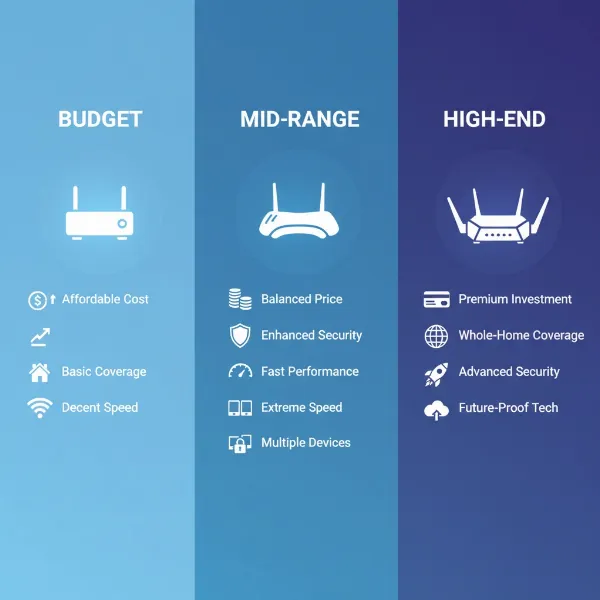
To simplify your choice, here are some top recommendations categorized by budget, highlighting their strengths and weaknesses.
Phân khúc giá rẻ (Budget-Friendly Segment – Under $100-120)
Ideal for individuals or small families with standard internet usage in smaller homes.
- Ưu điểm (Pros): Price-effective, provides sufficient speed and coverage for basic tasks, a significant upgrade over older Wi-Fi 5 routers.
- Nhược điểm (Cons): Limited advanced features, less powerful processors, may not handle very high simultaneous device counts or intense gaming/4K streaming as smoothly.
- Gợi ý sản phẩm (Suggested Products):
- TP-Link Archer AX10 (AX1500): Often considered the best cheap Wifi 6 router, offering adequate speed and range for everyday use, even 4K streaming with multiple users.
- NETGEAR WAX204 (AX1800): A valuable budget option with solid performance for small homes with sub-Gigabit broadband, despite being labeled an Access Point.
- ASUS RT-AX1800S (AX1800): A decent pick for small apartments or condos for reliable 4K streaming and web browsing, though it may lack DFS support.
Phân khúc tầm trung (Mid-Range Segment – $120-$300)
These routers strike a balance between price and performance, offering a robust set of features suitable for most average to large households.
- Ưu điểm (Pros): Good balance of price and performance, includes more advanced features like 160MHz channels, better coverage, and robust security suites. Capable of handling Gigabit internet connections and multiple demanding tasks.
- Nhược điểm (Cons): May still lack some extreme high-end features like 10Gbps ports or the 6GHz band of Wifi 6E.
- Gợi ý sản phẩm (Suggested Products):
- TP-Link Archer AX55 (AX3000): An excellent value-for-money dual-band router with strong range and speed performance, suitable for internet connections up to ~750Mbps.
- Synology WRX560 (AX3000): Praised for its excellent software, offering some of the best parental controls and network security features, making it ideal for busy family homes.
- ASUS RT-AX86U (AX5700): Once a top recommendation for a powerful dual-purpose router, excelling at both general connectivity and dedicated gaming performance with its multi-gig input port.
- GL.iNet GL-MT6000 (Flint 2) (AX6000): A dream for privacy-conscious techies, delivering incredible VPN speeds and dual 2.5G ports, running on OpenWRT for total customization.
Phân khúc cao cấp (High-End Segment – Over $300)
Designed for demanding users, large homes, and those wanting the absolute best in speed, coverage, and cutting-edge features, including Wifi 6E.
- Ưu điểm (Pros): Blazing-fast speeds, wide signal coverage, multiple multi-gig Ethernet ports, advanced gaming features, superior processing power, often includes Wifi 6E for the uncongested 6GHz band.
- Nhược điểm (Cons): Higher price point, some features (like 6GHz band) require compatible client devices to fully utilize.
- Gợi ý sản phẩm (Suggested Products):
- ASUS ROG Rapture GT-AX11000 Pro (AX11000): A well-equipped tri-band Wifi 6 gaming router with top-shelf performance, high-speed wired connectivity, and numerous gamer-friendly settings.
- NETGEAR Nighthawk RAXE500 (AXE11000): A speedy tri-band Wifi 6E router that utilizes the 6GHz radio band for lower latency and less interference, with multi-gig WAN/LAN and link aggregation.
- TP-Link Archer AXE75 (AXE5400): A strong contender for those wanting to jump onto the 6GHz band without emptying their bank account, offering solid Wifi 6E speeds for 4K streaming.
[image-5|wifi-troubleshooting-icons|A set of minimalistic icons representing common Wifi troubleshooting steps: a power plug for reboot, a wrench for settings, a magnifying glass for signal check, and a shield for security.|
A minimalist, clean graphic with four distinct icons arranged in a row. From left to right: A power plug symbol for “reboot,” a wrench or gear icon for “settings/configuration,” a magnifying glass over a Wi-Fi signal icon for “signal check/placement,” and a shield icon with a padlock for “security/updates.” The style is flat and uses a limited color palette for clarity.]
Conclusion
Upgrading to a Wifi 6 router is more than just buying a new gadget; it’s an investment in the future of your home network. With its incredible ability to deliver faster speeds, reduce latency, and efficiently manage a multitude of connected devices, Wifi 6 ensures a smoother, more reliable online experience for everyone. From casual browsing to hardcore gaming and 8K streaming, these routers are built to handle today’s demands and tomorrow’s innovations.
By understanding the different types, carefully considering your needs, and comparing the best options across various price points, you can confidently choose a Wifi 6 router that not only meets but exceeds your expectations. Don’t let an outdated router be the bottleneck of your digital life. Embrace the power of Wifi 6 and transform your home connectivity.
Are you ready to experience a truly seamless online world?
Frequently Asked Questions
What is the main difference between Wifi 6 and Wifi 6E?
Wifi 6 (802.11ax) operates on the traditional 2.4 GHz and 5 GHz bands, focusing on improving efficiency and speed in crowded environments. Wifi 6E extends this by adding support for the 6 GHz band, which offers significantly more dedicated, uncongested spectrum for even faster speeds and lower latency, ideal for newer, compatible devices.
Do I need Wifi 6 if I have an older modem?
A Wifi 6 router will work with any existing modem. However, to fully experience the benefits of Wifi 6, your internet service provider (ISP) plan should offer speeds that justify the upgrade. While it won’t magically increase your ISP speed, it will ensure that your home network isn’t the bottleneck and can deliver the maximum speed your modem provides.
Can Wifi 6 improve my internet speed if my ISP speed is low?
No, a Wifi 6 router cannot increase the maximum internet speed provided by your ISP. It can, however, make the available speed within your home network more efficient and consistent, especially if you have many devices or experience interference. This means you’ll maximize the speed you’re already paying for.
How does Wifi 6 improve battery life for my devices?
Wifi 6 includes a feature called Target Wake Time (TWT), which allows the router to communicate with devices and schedule when they should wake up to send or receive data. This enables devices to remain in a sleep state for longer periods, significantly conserving battery life for compatible smartphones, tablets, and IoT devices.
Is a Wifi 6 router backward compatible with older devices?
Yes, Wifi 6 routers are fully backward compatible with older Wi-Fi standards (802.11a/b/g/n/ac, or Wifi 5 and earlier). This means all your existing devices, regardless of their Wi-Fi generation, will be able to connect to a Wifi 6 router right out of the box, although only Wifi 6 compatible devices will benefit from the new standard’s enhanced features and speeds.