Are you tired of buffering, slow downloads, and dropped connections? If your home network struggles to keep up with multiple devices, 4K streaming, or online gaming, it might be time to upgrade to a Wi-Fi 6 router. This latest generation of wireless technology, also known as 802.11ax, is designed to offer faster speeds, increased capacity, and improved efficiency, especially in congested network environments. Choosing the right Wi-Fi 6 router can transform your online experience, but with so many options available, finding the perfect fit can be challenging. This comprehensive guide will walk you through everything you need to know to select the best Wi-Fi 6 router for your specific needs, ensuring a smooth, fast, and reliable connection throughout your home.
Understanding Different Types of Wi-Fi 6 Routers
Wi-Fi 6 routers come in various configurations, each suited for different environments and user demands. Understanding these classifications will help narrow down your options significantly.
Classification by Usage Needs
|
Our Picks for the Best Wifi 6 router in 2026
As an Amazon Associate I earn from qualifying purchases.
|
||
| Num | Product | Action |
|---|---|---|
| 1 | TP-Link Deco X55 AX3000 WiFi 6 Mesh System - Covers up to 2500 Sq.Ft., Replaces Wireless Router and Extender, 3 Gigabit Ports, Supports Ethernet Backhaul, Deco X55(1-Pack) |

|
| 2 | TP-Link AX5400 WiFi 6 Router (Archer AX73)- Dual Band Gigabit Wireless Internet Router for Streaming, Long Range Coverage |
|
| 3 | TP-Link Smart WiFi 6 Router (Archer AX10) – 4 Gigabit LAN Ports, Dual Band 802.11AX Router, Beamforming, OFDMA, MU-MIMO, Parental Controls, Dual-Core 900MHz Processor, Works with Alexa |
|
| 4 | NETGEAR Nighthawk WiFi 6 Router (RAX36) – Router Only, AX3000 3 Gbps Wireless Speed – Dual-Band Gigabit Internet – Covers 2,000 sq. ft., 25 Devices – Built-in VPN, USB 3.0, Gaming |
|
| 5 | TP-Link AX1800 WiFi 6 Router (Archer AX21 V5) – Dual Band Wireless Internet, Gigabit, Easy Mesh, Works with Alexa - A Certified for Humans Device, Free Expert Support |
|
| 6 | TP-Link Dual-Band BE3600 Wi-Fi 7 Router Archer BE230 | 4-Stream | 2×2.5G + 3×1G Ports, USB 3.0, 2.0 GHz Quad Core, 4 Antennas | VPN, EasyMesh, HomeShield, MLO, Private IOT | Free Expert Support |
|
| 7 | TP-Link Dual-Band AX3000 Wi-Fi 6 Router Archer AX55 | Wireless Gigabit Internet Router for Home | EasyMesh Compatible | VPN Clients & Server | HomeShield, OFDMA, MU-MIMO | USB 3.0 | Secure by Design |
|
| 8 | TP-Link Archer AX1450 WiFi 6 Dual-Band Wireless Router | up to 1.45 Gbps Speeds (Renewed) |
|
| 9 | ASUS RT-AX1800S Dual Band WiFi 6 Extendable Router, Subscription-Free Network Security, Parental Control, Built-in VPN, AiMesh Compatible, Gaming & Streaming, Smart Home |
|
| 10 | TP-Link AXE5400 Tri-Band WiFi 6E Router (Archer AXE75), 2025 PCMag Editors' Choice, Gigabit Internet for Gaming & Streaming, New 6GHz Band, 160MHz, OneMesh, Quad-Core CPU, VPN & WPA3 Security |
|
Your lifestyle and home setup play a crucial role in determining the ideal router.
Routers for Small Homes and Apartments
For smaller living spaces, such as single-bedroom apartments or small homes, a basic dual-band Wi-Fi 6 router is often sufficient. These models offer excellent performance for typical internet use, including streaming, browsing, and connecting a moderate number of devices. They are designed for efficiency and provide a solid upgrade over older Wi-Fi standards without unnecessary features or cost.
Routers for Large Homes and Multi-Story Houses
Larger homes, especially those with multiple floors, often encounter dead zones or inconsistent coverage. In such cases, a powerful standalone Wi-Fi 6 router with a high number of external antennas or a Wi-Fi 6 mesh system is recommended. Mesh systems consist of a main router and several satellite units, working together to blanket your entire home in a seamless, strong Wi-Fi signal, eliminating dead spots.
Routers for Gaming
Gamers demand low latency, stable connections, and high bandwidth. Wi-Fi 6 gaming routers are engineered with powerful processors, dedicated gaming ports, and Quality of Service (QoS) features that prioritize gaming traffic. Many also include features like DFS (Dynamic Frequency Selection) for less congested channels and robust software to manage network settings, ensuring a lag-free gaming experience even when other devices are active.
Routers for Small Offices and Work-From-Home Setups
For small offices or serious work-from-home professionals, reliability, security, and capacity are paramount. These routers often boast advanced security protocols like WPA3, VPN support, and guest network capabilities to segment devices. They are built to handle numerous simultaneous connections and maintain stable performance for video conferencing, large file transfers, and cloud-based applications.
Classification by Brand
Several manufacturers lead the market in Wi-Fi 6 router innovation, each with its own strengths and product lines.
TP-Link
TP-Link is known for offering a wide range of routers that balance performance and affordability. Their Archer series, such as the Archer AX55, provides excellent value for mid-range users, while their Deco mesh systems are popular for whole-home coverage. TP-Link routers often feature user-friendly apps for easy setup and management, along with robust security features like HomeShield.
ASUS
ASUS is a prominent brand, particularly favored by gamers for its ROG (Republic of Gamers) series, which includes high-performance models like the ROG Rapture GT-AX11000 Pro. ASUS routers are praised for their powerful hardware, extensive feature sets, and advanced customization options. Many models also support AiMesh, allowing you to combine multiple ASUS routers to create a mesh network.
Netgear
Netgear offers a strong lineup of Wi-Fi 6 routers under its Nighthawk and Orbi brands. Nighthawk routers are celebrated for their raw power and speed, catering to performance-demanding users. Orbi mesh systems are known for their premium design and exceptional whole-home coverage. Netgear often includes robust security suites like Netgear Armor.
Xiaomi
Xiaomi offers more budget-friendly Wi-Fi 6 router options, often providing good performance for their price point. While perhaps not as feature-rich as premium brands, they serve as excellent entry points into Wi-Fi 6 technology for users with basic to moderate needs.
Detailed Comparison Table: Top Wi-Fi 6 Router Models
To help you make an informed decision, here’s a comparison of some of the best Wi-Fi 6 routers currently available across different segments.
| Model | Speed (AX Rating) | Coverage/Range | Max Devices | Security Features | Price Segment | Notable Features |
|---|---|---|---|---|---|---|
| TP-Link Archer AX55 | AX3000 | Medium | ~50 | WPA3, HomeShield | Budget/Mid | Good value, OneMesh support, easy setup. |
| ASUS RT-AX86U | AX5700 | Large | ~80 | AiProtection Pro, WPA3 | Mid/High | Gaming port, AiMesh, robust parental controls. |
| Netgear Nighthawk RAX50 | AX5400 | Large | ~60 | Netgear Armor, WPA3 | Mid | Strong performance, Multi-Gig WAN. |
| eero 6 (2-pack) | AX1800 | Whole Home Mesh | ~75+ | WPA3, eero Secure | Budget/Mid | Simple mesh, good for moderate internet speeds. |
| Synology WRX560 | AX3000 | Large | ~70 | SRM OS, Parental control | Mid | Intuitive software, multi-gig WAN/LAN. |
| GL.iNet Flint 2 (GL-MT6000) | AX6000 | Large | ~120+ | VPN support, OpenWRT | Mid/High | Highly configurable, dual 2.5Gbps ports. |
| ASUS ROG Rapture GT-AX11000 Pro | AX11000 | Very Large | ~100+ | AiProtection Pro, WPA3 | High | Tri-band, 10Gbps port, gaming features. |
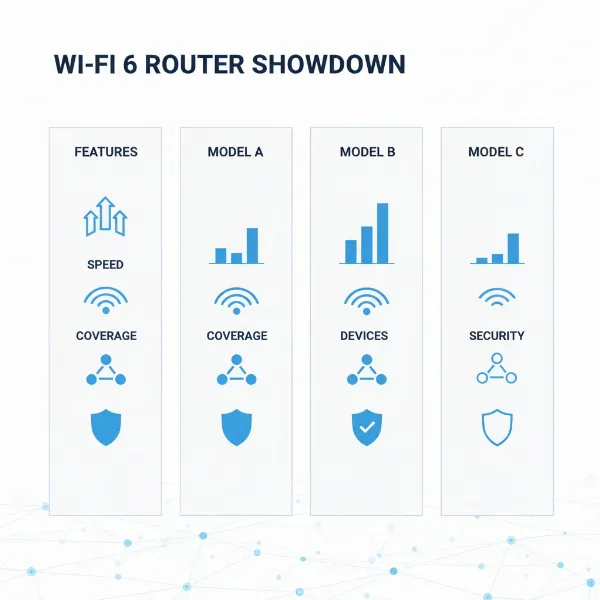 A clean, modern infographic comparing key specifications of different Wi-Fi 6 routers with icons for speed, range, and security.
Essential Buying Guide for Your Wi-Fi 6 Router
Selecting the right Wi-Fi 6 router requires careful consideration of your unique circumstances and future needs.
Key Factors to Consider When Buying
Don’t just pick the first router you see; evaluate these crucial elements.
- Usage Needs (Number of Devices, Area, Activities):
- Small household (1-2 people, small apartment): A dual-band AX1800-AX3000 router is likely sufficient.
- Large family/multi-story home (many users, large area): Consider a more powerful standalone AX5400+ router or a mesh system for comprehensive coverage.
- High-bandwidth activities (4K/8K streaming, VR, intense online gaming): Look for routers with higher AX ratings, tri-band capabilities, and multi-gig Ethernet ports.
- Smart home devices: Ensure the router handles many concurrent connections efficiently (look for OFDMA and MU-MIMO).
- Budget: Wi-Fi 6 routers range from under $100 for basic models to over $500 for high-end gaming or mesh systems. Determine how much you’re willing to spend, keeping in mind that investing a bit more now can future-proof your network.
- Necessary Features:
- Dual-band vs. Tri-band: Dual-band (2.4 GHz and 5 GHz) is standard. Tri-band adds another 5 GHz or a 6 GHz (Wi-Fi 6E) band, ideal for very congested networks or numerous high-bandwidth devices. Wi-Fi 6E, while newer, offers a less congested 6 GHz band for compatible devices.
- Security (WPA3, Parental Control, QoS): WPA3 is the latest encryption standard for enhanced security. Parental controls allow you to manage internet access for children. QoS (Quality of Service) prioritizes specific traffic (e.g., gaming, video calls) for optimal performance.
- Multi-gig Ethernet Ports: If you have an internet plan faster than 1 Gigabit or local devices that can utilize higher speeds (like a NAS), look for routers with 2.5 Gbps or 10 Gbps WAN/LAN ports.
- Mesh Capability: If you anticipate needing wider coverage in the future, choose a router that supports mesh expansion (e.g., ASUS AiMesh, TP-Link OneMesh).
- Reputable Brands: Sticking with well-known brands like ASUS, TP-Link, Netgear, Synology, and eero generally ensures better support, firmware updates, and reliability.
Smart Tips for Selecting Your Wi-Fi 6 Router
Beyond the technical specs, here are some practical tips.
- Thoroughly Read Specifications: Don’t just look at the marketing names. Understand the AX rating, number of bands, processor speed, and port types.
- Consult User Reviews and Expert Opinions: Real-world experiences can highlight aspects not covered in official specifications. Websites like PCMag, RTINGS, and reputable tech review channels offer in-depth analyses.
- Compare Prices Across Retailers: Prices can vary significantly. Check different online and physical stores to find the best deal.
- Verify Warranty and Support: A good warranty and accessible customer support can be invaluable if you encounter issues.
Common Wi-Fi 6 Router Problems and Troubleshooting
Even with the best router, you might face occasional issues. Here’s how to tackle them.
- Frequent Disconnections or Slow Speeds:
- Router Placement: Ensure your router is centrally located, elevated, and away from obstructions like thick walls, large metal objects, and other electronics that can cause interference (e.g., microwaves, cordless phones).
- Firmware Updates: Regularly check for and install the latest firmware updates. These often contain performance improvements and bug fixes.
- Wi-Fi Channel Congestion: Use a Wi-Fi analyzer app to identify less congested channels on both 2.4 GHz and 5 GHz bands, then manually switch your router’s channels in its settings.
- Too Many Devices/QoS: If too many devices are hogging bandwidth, consider enabling QoS settings to prioritize essential devices or applications.
- Outdated Client Devices: Older devices might not fully utilize Wi-Fi 6 benefits. Ensure your devices have updated Wi-Fi drivers.
- Difficulty Connecting Older Devices:
- 2.4 GHz Only Devices: Many smart home devices only support the 2.4 GHz band. If your Wi-Fi 6 router prioritizes 5 GHz, create a dedicated guest network for your 2.4 GHz devices.
- WPA3 Compatibility: Some older devices might struggle to connect to networks using WPA3 security. Temporarily switch your network to “WPA3/WPA2 mixed mode” if available, or WPA2 if necessary, for compatibility, though this reduces security.
- Security Concerns:
- Default Passwords: Always change default admin passwords immediately after setup.
- Built-in Security Suites: Utilize any included security software (e.g., AiProtection, HomeShield, Netgear Armor) for threat detection and prevention.
- Guest Network: Use a guest network for visitors to keep your main network isolated and secure.
“A well-configured Wi-Fi 6 router isn’t just about speed; it’s about network resilience and providing a consistent experience for every device in your home.” – Alex Chen, Network Engineer specializing in Home Wi-Fi Solutions.
Top Picks: Wi-Fi 6 Routers by Price Segment
To simplify your choice, here are some recommended Wi-Fi 6 routers segmented by budget.
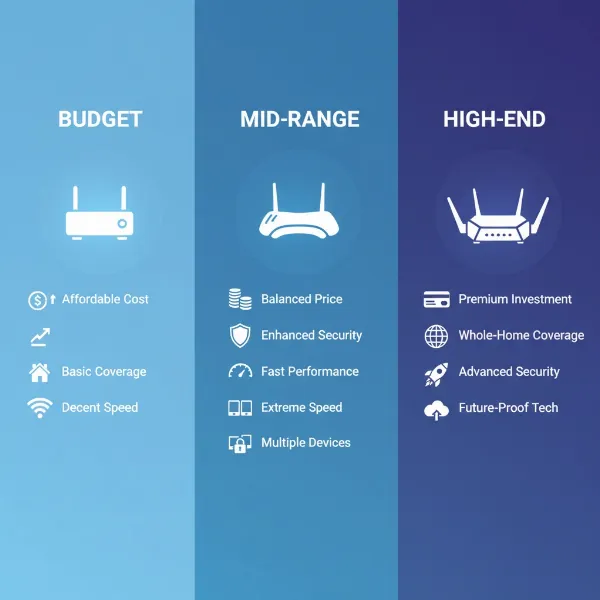
Affordable Segment (Under $150)
- Pros: Cost-effective entry into Wi-Fi 6, significantly better performance than older Wi-Fi 5 routers, suitable for basic to moderate internet plans.
- Cons: Limited advanced features, potentially lower theoretical speeds and range compared to more expensive models, fewer Ethernet ports.
- Recommended Products:
- TP-Link Archer AX10 (AX1500): A solid entry-level choice offering decent speeds and range for smaller homes or apartments. It’s a great upgrade for general browsing and streaming.
- Netgear WAX204 (AX1800): Often marketed as an access point but functions as a router, providing strong performance for its price, especially for sub-Gigabit connections in smaller homes.
- eero 6 (Single or 2-pack entry): While primarily a mesh system, a single eero 6 unit or a basic 2-pack provides an easy-to-use solution for moderate speeds and good coverage in small to medium-sized homes.
Mid-Range Segment ($150 – $300)
- Pros: Offers a balanced blend of performance, features, and price; suitable for Gigabit internet plans and multiple demanding users; often includes better security and management tools.
- Cons: May lack some high-end gaming features or multi-gig WAN/LAN ports found in premium models.
- Recommended Products:
- TP-Link Archer AX55 (AX3000): A popular choice delivering fast speeds and wide coverage, often praised for its stability and user-friendly interface.
- Synology WRX560 (AX3000): Known for its excellent throughput, strong signal, and robust, easy-to-use Synology Router Manager (SRM) software, including built-in parental controls and network security.
- ASUS RT-AX86U (AX5700): A powerful dual-band router that excels in both browsing and gaming. It features strong processing and AiMesh support for potential future mesh expansion.
Premium Segment (Over $300)
- Pros: Top-tier performance, blazing-fast speeds, extensive coverage, advanced gaming features, multi-gig ports, and robust security suites. Ideal for large homes, competitive gamers, and users with very high-speed internet.
- Cons: Higher price point, potentially more complex setup for advanced features.
- Recommended Products:
- ASUS ROG Rapture GT-AX11000 Pro (AX11000): A tri-band gaming powerhouse with a 10 Gbps port, advanced QoS, and numerous gamer-centric features, designed for uncompromising performance.
- TP-Link Archer AX11000 (AX11000): Another high-end tri-band option offering exceptional speeds, a powerful processor, and multiple Ethernet ports, suitable for large, demanding networks.
Conclusion
Upgrading to a Wi-Fi 6 router is a smart investment for anyone looking to improve their home network’s speed, efficiency, and capacity. By considering your specific needs—such as home size, number of devices, and primary online activities—and evaluating key features like speed, range, and security, you can confidently choose a Wi-Fi 6 router that perfectly fits your household. Whether you opt for an affordable dual-band model or a high-performance gaming beast, a well-chosen Wi-Fi 6 router will ensure a smoother, faster, and more reliable internet experience for years to come.
What aspects of your home network are you most excited to improve with a new Wi-Fi 6 router?
Frequently Asked Questions
What is the main difference between Wi-Fi 6 and Wi-Fi 5?
Wi-Fi 6 (802.11ax) offers significant improvements over Wi-Fi 5 (802.11ac) in terms of speed, efficiency, and capacity. Key advancements include OFDMA and MU-MIMO for handling more devices simultaneously, 1024-QAM for more efficient data encoding, and a longer OFDM symbol for increased range and stability. It’s designed for crowded network environments.
Do I need a Wi-Fi 6 router if I don’t have Wi-Fi 6 compatible devices?
While Wi-Fi 6 routers are backward compatible with older Wi-Fi standards, you’ll only experience the full benefits of Wi-Fi 6 with compatible devices. However, a Wi-Fi 6 router can still improve your network’s overall efficiency and prepare it for future Wi-Fi 6 device upgrades.
Is Wi-Fi 6E better than Wi-Fi 6?
Wi-Fi 6E builds upon Wi-Fi 6 by adding support for the 6 GHz band, making it a tri-band technology (2.4 GHz, 5 GHz, and 6 GHz). The 6 GHz band is significantly less congested, offering even faster speeds and lower latency for compatible devices, making it ideal for high-priority devices in busy networks.
How important are multi-gig Ethernet ports on a Wi-Fi 6 router?
Multi-gig Ethernet ports (2.5 Gbps or 10 Gbps) are crucial if you have an internet service plan faster than 1 Gbps or if you frequently transfer large files between devices on your local network (e.g., to a NAS). They ensure that your wired connections don’t bottleneck your wireless speeds.
Can a single Wi-Fi 6 router cover my entire large house?
For very large or multi-story homes, a single Wi-Fi 6 router, even a powerful one, might struggle to provide consistent coverage everywhere. In such cases, a Wi-Fi 6 mesh system is often a more effective solution, using multiple units to create a unified, strong Wi-Fi signal throughout your entire property.