Choosing the right router can be a daunting task, especially with the constant evolution of wireless technology. As an experienced network technician, I frequently encounter questions about the differences between Wifi 6 routers and dedicated gaming routers. Many believe they are interchangeable, but they serve distinct purposes, each excelling in specific scenarios. Understanding these nuances is crucial for optimizing your home network, whether you’re a casual browser, a streaming enthusiast, or a competitive gamer where every millisecond counts. This article will delve into the core functionalities, benefits, and key distinctions between these two powerful router categories, helping you make an informed decision to elevate your connectivity.
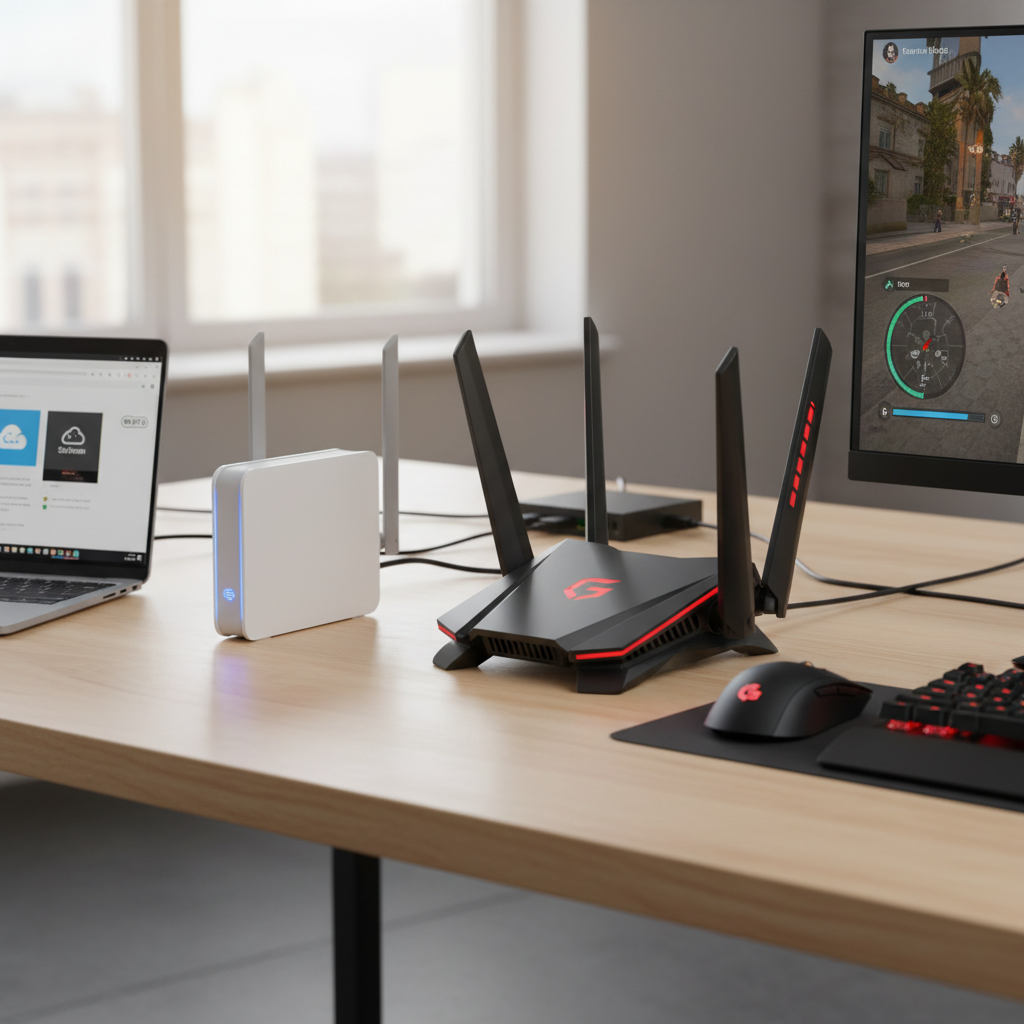
Understanding Wifi 6 Routers
Wifi 6, also known as 802.11ax, represents a significant leap forward in wireless technology, designed to handle the increasing number of connected devices in modern homes and offices. It’s not just about raw speed, though it does offer theoretical speeds up to 9.6 Gbps. More importantly, Wifi 6 focuses on efficiency and capacity, particularly in congested network environments. This standard uses several sophisticated technologies to achieve its improvements.
At its core, Wifi 6 leverages Orthogonal Frequency-Division Multiple Access (OFDMA), which allows a single channel to carry data for multiple devices simultaneously, akin to a delivery truck making multiple stops on one trip rather than one stop per trip. This dramatically reduces latency and improves efficiency, especially when many devices are vying for bandwidth. Another critical feature is bi-directional Multi-User Multiple-Input, Multiple-Output (MU-MIMO), which enables routers to communicate with multiple devices at once on both uplink and downlink, a significant enhancement over previous Wifi 5 (802.11ac) which only supported downlink MU-MIMO. Furthermore, Target Wake Time (TWT) helps client devices negotiate when and how often they will wake up to send or receive data, extending battery life for smart home gadgets and mobile devices. These innovations combined mean a Wifi 6 router delivers a more reliable, faster, and more efficient wireless experience for the entire household, reducing latency by up to 75% compared to older standards.
Understanding Gaming Routers
While many modern routers incorporate Wifi 6 technology, a dedicated gaming router goes a step further by offering specialized features tailored for optimal gaming performance. Think of a gaming router as a high-performance sports car versus a standard, albeit efficient, sedan. Its design and firmware are engineered to give online gamers a competitive edge by prioritizing game traffic and minimizing lag.
The hallmark of a gaming router is its advanced Quality of Service (QoS) engine. This feature allows users to prioritize specific types of traffic, ensuring that your game data gets preferential treatment over other network activities like 4K streaming or large downloads. Many gaming routers offer intuitive dashboards to easily allocate bandwidth and monitor network usage, giving you granular control over your connection. Beyond QoS, gaming routers often boast more powerful processors, ample RAM, and enhanced cooling systems to handle demanding workloads without throttling. Some even include dedicated gaming ports that provide a direct, high-priority wired connection to your gaming PC or console. These routers are designed not just for speed, but for a stable, low-latency, and uninterrupted gaming experience, crucial for competitive play where every millisecond matters. According to HP, gaming routers “typically have more powerful hardware, advanced QoS features, lower latency, and often include game-specific optimizations that regular routers don’t offer”.
Key Differences: Wifi 6 Router vs Gaming Router
While a pure Wifi 6 router enhances overall network performance, and a gaming router focuses on optimizing game traffic, understanding their distinct approaches is key.
Core Technology vs. Feature Set: A Wifi 6 router refers to a device that supports the 802.11ax standard, bringing benefits like increased speed, capacity, and efficiency to all connected devices. A gaming router, conversely, is a category of router that often includes Wifi 6 (or even newer standards like Wifi 6E/7) but adds a layer of specialized software and hardware features specifically for gaming. The core difference lies in whether the primary focus is general network improvement or game-centric optimization.
Performance Optimization: A standard Wifi 6 router optimizes the entire network for better throughput and efficiency, which indirectly benefits gaming by providing a more robust foundation. A gaming router, however, actively and intelligently prioritizes gaming packets. Its proprietary software can identify game traffic and allocate maximum bandwidth, minimizing ping and latency even when the network is otherwise busy. This active management is often missing in standard Wifi 6 routers, which treat all data packets equally.
Latency Management: Wifi 6 inherently reduces latency through technologies like OFDMA, making the network more responsive for all devices. Gaming routers take this a step further with specialized QoS engines that actively combat lag by giving gaming traffic absolute priority, potentially even throttling other applications. This can result in a more significant and noticeable reduction in ping spikes during intense online sessions.
Hardware and Software: While many Wifi 6 routers have capable hardware, gaming routers typically feature more robust processors, larger amounts of RAM, and sometimes even dedicated network processing units (NPUs). Their firmware includes advanced user interfaces, often with “gaming mode” settings, dynamic frequency selection, and even built-in VPN client support tailored for gamers. These hardware and software enhancements ensure consistent performance under heavy gaming loads and allow for deep customization.
Cost: Generally, a dedicated gaming router, especially one with advanced features and cutting-edge Wifi standards, will command a higher price point than a standard Wifi 6 router. The premium reflects the specialized hardware, proprietary software, and game-specific optimizations. However, the market for Wifi 6 routers is vast, with options ranging from budget-friendly to high-end models.
When to Choose a Wifi 6 Router
A standard Wifi 6 router is an excellent choice for a wide range of users and scenarios where general network performance, efficiency, and future-proofing are key considerations.
Consider a Wifi 6 router if your home has a growing number of connected devices, including smartphones, tablets, smart TVs, IoT devices, and multiple users streaming, browsing, and working from home. The enhanced capacity and efficiency of Wifi 6 shine in such multi-device environments, ensuring smoother performance for everyone without significant slowdowns. If you frequently stream high-definition content, engage in video conferencing, or transfer large files across your network, the improved throughput and reduced latency of Wifi 6 will provide a noticeably better experience. Moreover, as more devices come equipped with Wifi 6 capabilities, upgrading to a Wifi 6 router ensures compatibility and allows you to take full advantage of their potential. It’s an ideal choice for the average household looking for a reliable, fast, and efficient network that can handle modern demands without breaking the bank, offering a substantial upgrade from older Wifi standards.
[image-1|wifi-6-router-home-network|Wifi 6 router central to a bustling modern home network, supporting multiple devices|
A sleek, modern Wifi 6 router positioned centrally in a contemporary living room, emitting a subtle, glowing light. Various wireless devices like a laptop, smartphone, smart TV, and tablet are scattered around the room, connected seamlessly. The scene is brightly lit, showcasing an efficient, interconnected home environment, rendered in a realistic, editorial style.]
When to Choose a Gaming Router
For serious gamers and households where competitive online play is a priority, a dedicated gaming router is often the superior choice. These devices are purpose-built to minimize any potential network bottlenecks that could impact your in-game performance.
If you are a competitive esports player, streamer, or someone who simply despises lag and ping spikes, a gaming router is designed to deliver the lowest possible latency and the most stable connection for your gaming sessions. Its specialized QoS features give you precise control, allowing you to prioritize your gaming console or PC above all other network traffic. This means even if other family members are streaming 4K movies or downloading large files, your game will remain unaffected. Gaming routers are also beneficial in homes with multiple users and high-bandwidth activities, where preventing network congestion for critical gaming applications is essential. The robust hardware and advanced firmware found in gaming routers ensure that they can handle intense network loads without faltering, providing a consistent and smooth online experience that a standard router, even a Wifi 6 one, might struggle to maintain under extreme conditions.
“For competitive gamers, a dedicated gaming router isn’t just a luxury; it’s a strategic tool. The ability to prioritize game traffic and fine-tune network settings can be the difference between victory and defeat.” – Alex Chen, Lead Network Architect, GameLink Solutions
Hybrid Solutions and Future Trends
The lines between standard and gaming routers are becoming increasingly blurred, with many modern gaming routers now fully embracing and enhancing Wifi 6 technology. This convergence offers users the best of both worlds.
A “Wifi 6 Gaming Router” combines the advanced efficiency and speed of the Wifi 6 standard with the game-centric optimizations of a dedicated gaming router. These devices deliver the high capacity and lower latency benefits of Wifi 6 across the entire network, while still providing the granular QoS controls and powerful hardware that gamers demand. Looking ahead, the introduction of Wifi 6E and Wifi 7 (802.11be) signals even more significant advancements for high-demand applications like gaming. Wifi 6E expands the network into the 6GHz band, offering a completely new, uncongested spectrum for compatible devices. This “express lane” can virtually eliminate interference from older devices and neighboring networks, providing ultra-low latency and incredibly fast speeds, especially beneficial for VR/AR gaming and highly competitive online play. Wifi 7, or Wi-Fi 7, builds upon this with even wider channels, higher data rates (4K-QAM), and multi-link operation (MLO), promising unprecedented speeds and reliability. Furthermore, mesh Wifi systems, once primarily focused on coverage, are also evolving to incorporate gaming features, offering seamless whole-home coverage with integrated QoS for a smooth gaming experience no matter where you are in your house.
How to Choose the Right Router for Your Needs (Buying Guide)
Selecting the ideal router involves more than just picking the latest technology. It’s about aligning the router’s capabilities with your specific needs and environment.
First, consider your internet service plan. A top-tier Wifi 6 or gaming router won’t magically make a 100 Mbps internet plan perform like a gigabit connection. Ensure your router’s capabilities match or exceed your ISP’s speed. Second, assess the number of connected devices and users in your home. A busy household with multiple streamers, gamers, and smart devices will benefit significantly from the higher capacity of Wifi 6. Third, evaluate the size and layout of your home. For larger homes or those with many walls, a router with good range and powerful antennas is crucial, and a mesh system might be necessary. Fourth, set a realistic budget. While a gaming router offers premium features, a high-quality standard Wifi 6 router might suffice if competitive gaming isn’t your primary concern. Finally, for primary gaming rigs, prioritize wired connections. Even the best wireless router cannot match the stability and zero packet loss of a direct Ethernet connection.
“The biggest mistake people make is overbuying or underbuying. Match your router to your internet plan, your home’s needs, and your budget, and you’ll always get the best value.” – Maria Rodriguez, Senior Network Engineer, Connect Solutions
| Feature | Standard Wifi 6 Router | Gaming Router (often includes Wifi 6/6E) |
|---|---|---|
| Primary Focus | Overall network efficiency & speed | Gaming performance & prioritization |
| Key Technologies | Wifi 6 (OFDMA, MU-MIMO, TWT) | Wifi 6/6E/7, Advanced QoS, Game-specific firmware |
| Latency | Reduced by Wifi 6 standard | Actively minimized by QoS/prioritization |
| Hardware | Solid, efficient for general use | More powerful CPUs, RAM, advanced cooling |
| Software | Basic network management interfaces | Advanced gaming dashboards, traffic control |
| Price | Mid-range to high-end | Generally higher-end |
| Best For | Multi-device homes, streaming, future-proofing | Competitive gaming, high-demand, low-latency networks |
Conclusion
Both Wifi 6 routers and dedicated gaming routers offer significant advantages in today’s demanding network environments, but their strengths lie in different areas. A standard Wifi 6 router provides a robust, efficient, and future-proof foundation for any multi-device household, excelling at managing bandwidth and reducing latency for a broad range of activities. A gaming router, however, is a specialized tool engineered to give competitive gamers an undeniable edge through aggressive traffic prioritization, powerful hardware, and game-specific optimizations.
Ultimately, the “better” choice depends entirely on your specific needs and priorities. If your primary goal is a fast, stable, and efficient network for a household with diverse activities, a quality Wifi 6 router will serve you exceptionally well. But if you’re a serious gamer for whom every millisecond counts and you demand ultimate control over your network’s gaming performance, investing in a dedicated gaming router, especially one that incorporates Wifi 6 or newer standards, is a worthwhile decision. What kind of network user are you, and what are your absolute top priorities for your home internet?
Frequently Asked Questions
Does a Wifi 6 router improve gaming?
|
Our Picks for the Best Wifi 6 router in 2026
As an Amazon Associate I earn from qualifying purchases.
|
||
| Num | Product | Action |
|---|---|---|
| 1 | TP-Link Deco X55 AX3000 WiFi 6 Mesh System - Covers up to 2500 Sq.Ft., Replaces Wireless Router and Extender, 3 Gigabit Ports, Supports Ethernet Backhaul, Deco X55(1-Pack) |

|
| 2 | TP-Link AXE5400 Tri-Band WiFi 6E Router (Archer AXE75), 2025 PCMag Editors' Choice, Gigabit Internet for Gaming & Streaming, New 6GHz Band, 160MHz, OneMesh, Quad-Core CPU, VPN & WPA3 Security |
|
| 3 | TP-Link AX5400 WiFi 6 Router (Archer AX73)- Dual Band Gigabit Wireless Internet Router for Streaming, Long Range Coverage |
|
| 4 | TP-Link Dual-Band BE3600 Wi-Fi 7 Router Archer BE230 | 4-Stream | 2×2.5G + 3×1G Ports, USB 3.0, 2.0 GHz Quad Core, 4 Antennas | VPN, EasyMesh, HomeShield, MLO, Private IOT | Free Expert Support |
|
| 5 | TP-Link Smart WiFi 6 Router (Archer AX10) – 4 Gigabit LAN Ports, Dual Band 802.11AX Router, Beamforming, OFDMA, MU-MIMO, Parental Controls, Dual-Core 900MHz Processor, Works with Alexa |
|
| 6 | NETGEAR Nighthawk WiFi 6 Router (RAX36) – Router Only, AX3000 3 Gbps Wireless Speed – Dual-Band Gigabit Internet – Covers 2,000 sq. ft., 25 Devices – Built-in VPN, USB 3.0, Gaming |
|
| 7 | ASUS RT-AX1800S Dual Band WiFi 6 Extendable Router, Subscription-Free Network Security, Parental Control, Built-in VPN, AiMesh Compatible, Gaming & Streaming, Smart Home |
|
| 8 | TP-Link Archer AX1450 WiFi 6 Dual-Band Wireless Router | up to 1.45 Gbps Speeds (Renewed) |
|
| 9 | TP-Link AX1800 WiFi 6 Router (Archer AX21 V5) – Dual Band Wireless Internet, Gigabit, Easy Mesh, Works with Alexa - A Certified for Humans Device, Free Expert Support |
|
| 10 | TP-Link Dual-Band AX3000 Wi-Fi 6 Router Archer AX55 | Wireless Gigabit Internet Router for Home | EasyMesh Compatible | VPN Clients & Server | HomeShield, OFDMA, MU-MIMO | USB 3.0 | Secure by Design |
|
Yes, a Wifi 6 router can significantly improve gaming performance by offering faster speeds, increased network capacity, and lower latency through technologies like OFDMA and MU-MIMO. It provides a more stable and efficient connection, especially in environments with many connected devices, reducing overall lag.
What features make a router “gaming”?
Gaming routers are distinguished by features like advanced Quality of Service (QoS) for prioritizing game traffic, powerful processors, ample RAM, dedicated gaming Ethernet ports, and intuitive software dashboards for fine-tuning network settings to minimize latency and improve responsiveness during online play.
Is Wifi 6E better for gaming than Wifi 6?
Yes, Wifi 6E offers an advantage over Wifi 6 for gaming due to its access to the 6GHz band. This band provides a new, uncongested spectrum that is less prone to interference from other devices and neighboring networks, potentially resulting in even lower latency and higher, more stable speeds for compatible gaming devices.
Should I just use an Ethernet cable for gaming?
For the absolute lowest latency, most stable connection, and zero packet loss, a wired Ethernet connection is almost always superior to Wi-Fi for primary gaming rigs. While Wifi 6 and gaming routers significantly improve wireless performance, a direct cable eliminates many potential wireless interferences and fluctuations.