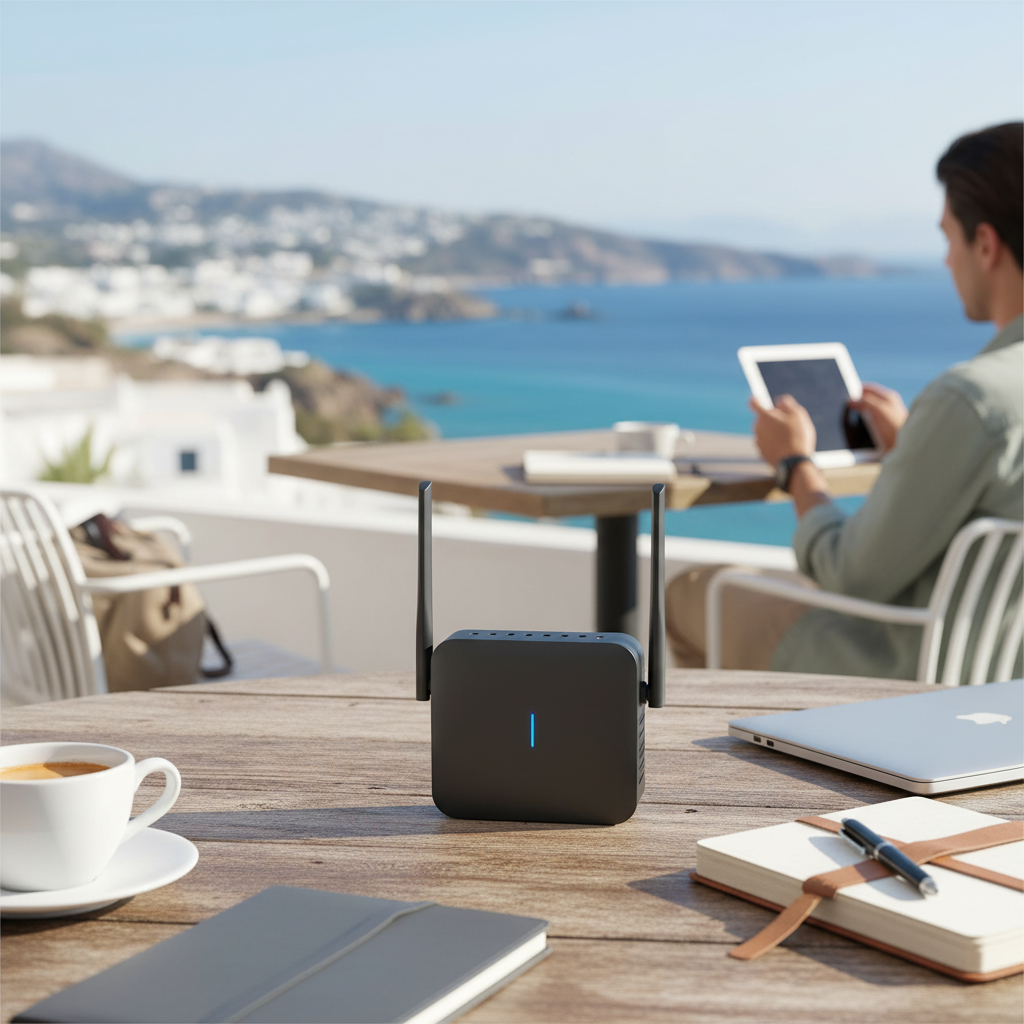
Are you tired of sluggish internet speeds, buffering videos, or frustrating “dead zones” where your Wi-Fi signal simply won’t reach? In today’s hyper-connected homes, a reliable and fast internet connection is no longer a luxury, but a necessity. With an ever-growing number of devices – from smartphones and smart TVs to gaming consoles and smart home gadgets – all vying for bandwidth, your network needs to keep up. This often leads homeowners to a crucial dilemma: should you upgrade to a state-of-the-art Wifi 6 router, or is a simpler Wifi signal booster enough to solve your connectivity woes? This comprehensive guide will dissect the capabilities of both solutions, helping you decide the best path to a seamless home network experience.
Understanding Wifi 6 Routers: The Next Generation of Connectivity
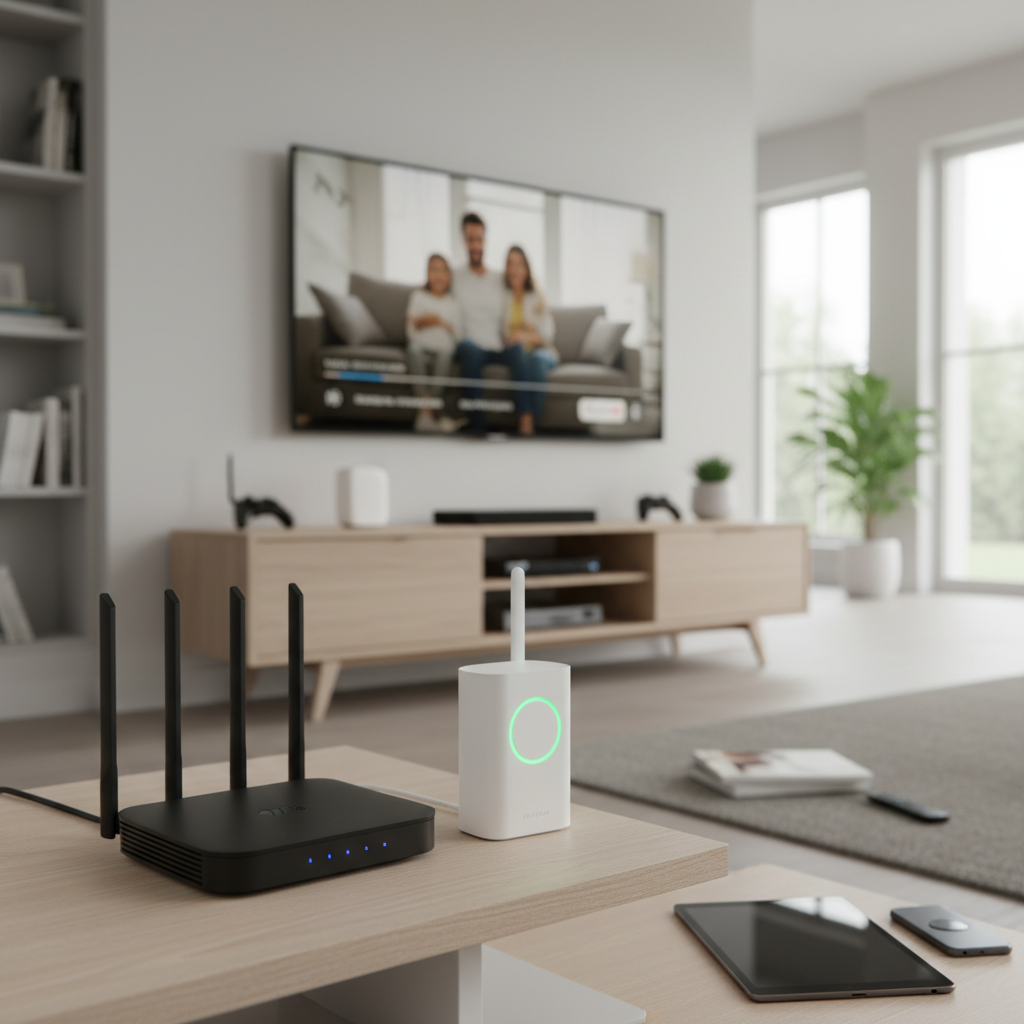
Wifi 6, formally known as 802.11ax, represents the latest evolutionary leap in wireless technology, designed to significantly improve upon its predecessor, Wifi 5 (802.11ac). It’s not just about raw speed, though it delivers that too; Wifi 6 is engineered to handle the demands of modern, multi-device environments with far greater efficiency and capacity.
What is Wifi 6 (802.11ax)?
|
Our Picks for the Best Wifi 6 router in 2026
As an Amazon Associate I earn from qualifying purchases.
|
||
| Num | Product | Action |
|---|---|---|
| 1 | NETGEAR Nighthawk WiFi 6 Router (RAX36) – Router Only, AX3000 3 Gbps Wireless Speed – Dual-Band Gigabit Internet – Covers 2,000 sq. ft., 25 Devices – Built-in VPN, USB 3.0, Gaming |

|
| 2 | TP-Link Smart WiFi 6 Router (Archer AX10) – 4 Gigabit LAN Ports, Dual Band 802.11AX Router, Beamforming, OFDMA, MU-MIMO, Parental Controls, Dual-Core 900MHz Processor, Works with Alexa |
|
| 3 | TP-Link AXE5400 Tri-Band WiFi 6E Router (Archer AXE75), 2025 PCMag Editors' Choice, Gigabit Internet for Gaming & Streaming, New 6GHz Band, 160MHz, OneMesh, Quad-Core CPU, VPN & WPA3 Security |
|
| 4 | TP-Link Archer AX1450 WiFi 6 Dual-Band Wireless Router | up to 1.45 Gbps Speeds (Renewed) |
|
| 5 | ASUS RT-AX1800S Dual Band WiFi 6 Extendable Router, Subscription-Free Network Security, Parental Control, Built-in VPN, AiMesh Compatible, Gaming & Streaming, Smart Home |
|
| 6 | TP-Link Dual-Band AX3000 Wi-Fi 6 Router Archer AX55 | Wireless Gigabit Internet Router for Home | EasyMesh Compatible | VPN Clients & Server | HomeShield, OFDMA, MU-MIMO | USB 3.0 | Secure by Design |
|
| 7 | TP-Link AX5400 WiFi 6 Router (Archer AX73)- Dual Band Gigabit Wireless Internet Router for Streaming, Long Range Coverage |
|
| 8 | TP-Link Dual-Band BE3600 Wi-Fi 7 Router Archer BE230 | 4-Stream | 2×2.5G + 3×1G Ports, USB 3.0, 2.0 GHz Quad Core, 4 Antennas | VPN, EasyMesh, HomeShield, MLO, Private IOT | Free Expert Support |
|
| 9 | TP-Link AX1800 WiFi 6 Router (Archer AX21 V5) – Dual Band Wireless Internet, Gigabit, Easy Mesh, Works with Alexa - A Certified for Humans Device, Free Expert Support |
|
| 10 | TP-Link Deco X55 AX3000 WiFi 6 Mesh System - Covers up to 2500 Sq.Ft., Replaces Wireless Router and Extender, 3 Gigabit Ports, Supports Ethernet Backhaul, Deco X55(1-Pack) |
|
Wifi 6 builds on the foundation of earlier Wi-Fi standards but introduces groundbreaking features to optimize multi-user performance and spectral efficiency. It operates on the same 2.4 GHz and 5 GHz frequency bands as previous generations, ensuring backward compatibility with your existing devices. However, it leverages advanced technologies to make these bands work smarter and harder, rather than just faster. For instance, Wifi 6 is designed to deliver a more enjoyable experience across the board, supporting everything from 4K and 8K streaming to large file transfers and intensive online gaming.
Key Benefits of Upgrading to a Wifi 6 Router
Upgrading to a Wifi 6 router brings a host of advantages that fundamentally transform your network’s capabilities. Firstly, you can expect increased speeds, with theoretical maximums reaching up to 9.6 Gbps across multiple streams, making it significantly faster even for a single device compared to Wifi 5. This boost ensures quicker downloads, smoother streaming, and more responsive online interactions.
Beyond speed, Wifi 6 excels in higher capacity and efficiency, crucial for homes brimming with connected devices. Technologies like Orthogonal Frequency Division Multiple Access (OFDMA) and Multi-User Multiple Input Multiple Output (MU-MIMO) allow the router to communicate with multiple devices simultaneously, reducing congestion and latency. This means your smart home ecosystem, from security cameras to voice assistants, can operate without bottlenecks. Furthermore, Wifi 6 introduces improved security with support for the WPA3 protocol, offering stronger encryption and better protection against cyber threats. It also features Target Wake Time (TWT), which intelligently schedules when devices wake to send or receive data, leading to better battery life for your connected gadgets. While primarily focused on efficiency, these enhancements can also lead to more reliable signal coverage within the router’s primary range.
When a Wifi 6 Router is Your Best Option
Investing in a Wifi 6 router is highly recommended if you are looking to replace an aging router, particularly if it’s several years old. It’s the ideal choice if you subscribe to a gigabit internet plan and want to ensure your home network can actually deliver those speeds to your devices. If your household has many connected devices – smart home gadgets, multiple streaming devices, gaming consoles – a Wifi 6 router will provide the necessary capacity and efficiency to keep everything running smoothly without slowdowns. For avid gamers, 4K/8K streamers, or professionals dealing with large file transfers, the reduced latency and increased throughput of Wifi 6 are invaluable. Ultimately, choosing a Wifi 6 router is about future-proofing your network, providing a robust foundation for years to come.
[image-1|wifi-6-router-modern-home|A sleek, modern Wifi 6 router positioned centrally in a contemporary living room, emitting wireless signals to various smart devices like a laptop, tablet, and smart TV. The setting is bright and spacious, with soft, natural lighting, in a realistic and illustrative style.|
A sleek, modern Wifi 6 router in a contemporary living room, positioned centrally. It has a minimalist design, with subtle indicator lights. Wireless signals are visually represented as subtle, glowing lines extending from the router to nearby devices: a laptop on a coffee table, a tablet held by a person on a sofa, and a smart TV on a stand. The room is bright and spacious, with warm, natural lighting coming from large windows. The style is a blend of realistic photography with subtle illustrative elements to highlight the Wi-Fi signals.]
Understanding Wifi Signal Boosters: Extending Your Existing Network
While a new Wifi 6 router provides a powerful central hub, sometimes your existing network, even a capable one, might struggle to cover every corner of a large or complex home. This is where Wifi signal boosters come into play, offering solutions to extend your network’s reach. The term “Wifi booster” is a general category that encompasses various devices, primarily Wifi range extenders (or repeaters) and more advanced Mesh Wifi systems.
What are Wifi Signal Boosters (Extenders, Repeaters, Mesh Systems)?
A Wifi signal booster is any device designed to take your existing Wi-Fi signal and extend its coverage. The most common type is a Wifi range extender (often synonymous with a Wifi repeater), which picks up the signal from your main router and rebroadcasts it further. A more sophisticated solution for broader coverage is a Mesh Wifi system, which uses multiple interconnected devices (nodes) to create a unified network across your entire home.
How Do Signal Boosters Work?
Wifi range extenders operate by acting as a middleman. You plug them into an electrical outlet roughly halfway between your main router and the area with weak Wi-Fi. The extender receives the signal from your router and then retransmits it. While this can effectively push the signal into a dead zone, it often comes with limitations. Traditional extenders can halve your bandwidth because they have to receive and transmit data on the same wireless channel. They might also create a separate network name (SSID), meaning your devices won’t seamlessly switch between the main router and the extender.
Mesh Wifi systems, on the other hand, offer a more elegant and integrated solution. Instead of simply rebroadcasting, multiple mesh nodes communicate with each other and the main router to create a single, unified Wi-Fi network that blankets your entire home. Your devices see only one network name and automatically connect to the strongest signal as you move around, providing seamless roaming. Many mesh systems utilize dedicated wireless channels for “backhaul” communication between nodes (tri-band systems), preventing the bandwidth slowdowns common with simple extenders. Some can even use wired Ethernet connections for backhaul if your home is wired.
“For expansive homes with persistent dead zones and a desire for consistent, high-speed connectivity, a well-implemented Mesh Wifi system often outperforms traditional range extenders by creating a truly seamless network experience.” – Expert Network Technician, Reviewspcs.com
When a Signal Booster is the Right Choice
A simple Wifi range extender can be a cost-effective and easy-to-set-up solution if you have one or two isolated dead zones and your primary router is already relatively new and powerful. For instance, if your patio or a single bedroom consistently has weak signal but the rest of your home is fine, an extender might be sufficient. They are typically inexpensive and require minimal configuration.
For larger homes, multi-story houses, or properties with challenging layouts (e.g., thick walls that block signals), a Mesh Wifi system is often the superior choice. If you desire seamless coverage where your devices smoothly transition between access points without interruption, a mesh system is ideal. It effectively eliminates multiple dead zones, provides more consistent speeds across a wider area, and offers centralized management through a user-friendly app. Mesh systems are particularly beneficial if you have a powerful internet connection and want to ensure that speed is available throughout your property, not just near your main router.
Wifi 6 Router vs. Signal Booster: A Comprehensive Comparison
Deciding between upgrading your main router to Wifi 6 or adding a signal booster largely depends on the root of your connectivity problems and your overall network goals. Let’s break down the key differences and similarities.
Key Differences and Similarities
When comparing these two solutions, consider several critical aspects:
- Performance and Speed: A Wifi 6 router fundamentally improves the source of your Wi-Fi, enhancing overall speed, efficiency, and capacity for all connected devices from the ground up. Signal boosters, especially traditional extenders, merely extend an existing signal, which can be limited by the primary router’s performance and often introduce latency or reduce bandwidth. Mesh systems improve upon this by creating a more robust, distributed network.
- Coverage and Range Extension: While a new Wifi 6 router might offer slightly better native coverage and signal reliability due to advanced technologies, its primary role isn’t range extension to distant dead zones. Signal boosters, by definition, specialize in extending coverage. Mesh systems excel here, blanketing large areas with a unified network.
- Network Management and Features: A Wifi 6 router provides comprehensive control over your entire network, including advanced features like Quality of Service (QoS) for prioritizing traffic, robust parental controls, and intricate security settings. Simple extenders offer minimal network management, often operating as a secondary access point. Mesh systems bring back centralized control, offering many of the management features found in high-end routers.
- Cost-Effectiveness: A new Wifi 6 router can be a significant initial investment, but it replaces a core piece of equipment. Traditional extenders are generally the most affordable add-on. Mesh systems represent a mid-to-high-range investment, often comparable to or exceeding the cost of a high-end standalone router.
- Setup Complexity: Basic Wifi extenders are usually plug-and-play, requiring minimal setup. Upgrading to a new router involves configuring your primary network settings. Mesh systems generally offer user-friendly app-based setup, making the process relatively straightforward despite the multiple devices.
Comparison Table: Wifi 6 Router vs. Signal Booster
| Feature | Wifi 6 Router | Signal Booster (Extender) | Signal Booster (Mesh System) |
|---|---|---|---|
| Primary Function | New/Upgrade Core Network | Extend Existing Signal to a Spot | Whole-Home Seamless Coverage |
| Performance Boost | Fundamental Improvement, Optimal Speed/Efficiency | Limited by Primary Router, Potential Slowdown | Excellent, Consistent Speed, Seamless Roaming |
| Network Efficiency | OFDMA, MU-MIMO, High Capacity | Can Create Bottlenecks, Limited Efficiency | Distributed Network, Efficient Traffic Flow |
| Network Management | Full Control, Advanced Features (QoS, WPA3) | Basic, May Create Separate Network (SSID) | Integrated Central Control, Advanced Features |
| Best Use Case | Old router upgrade, high ISP speeds, many devices, gaming/streaming | Isolated small dead zones, budget-conscious | Large homes, multiple dead zones, seamless coverage desire |
| Cost (Relative) | Higher Initial Investment | Lower Add-on Cost | Medium to High Initial Investment |
| Setup Complexity | Primary Network Configuration | Easy (Plug-and-Play) | App-Based, Generally User-Friendly |
Choosing the Ideal Solution for Your Home Network
Making the right choice between a Wifi 6 router and a signal booster hinges on accurately assessing your current network’s limitations and your long-term connectivity goals. There’s no one-size-fits-all answer, but by considering a few key factors, you can pinpoint the best solution.
Factors to Consider Before Deciding
- Existing Network Setup: How old is your current router? If it’s an older Wifi 5 (802.11ac) or even Wifi 4 (802.11n) model, upgrading the core router will provide the most significant overall performance boost. If your router is relatively new and capable, but you have specific areas of poor coverage, a booster might be more appropriate.
- Home Size and Layout: For smaller apartments or open-plan homes, a single, powerful Wifi 6 router might suffice. Large, multi-story houses, or those with many physical obstructions (thick walls, brick, metal), will likely benefit from a distributed solution like a mesh system.
- Internet Service Provider (ISP) Speed: If your internet plan offers speeds of 500 Mbps or higher, an old router can become a bottleneck. A Wifi 6 router is essential to fully utilize these speeds. If your ISP speed is lower, the incremental speed benefits of Wifi 6 might be less noticeable, but the efficiency gains still apply.
- Number and Type of Devices: A household with dozens of smart devices, multiple 4K streaming users, and online gamers demands higher capacity and efficiency. Wifi 6 excels here. If you only have a few devices, the benefits might be overkill unless you’re experiencing severe range issues.
- Budget: Simple extenders are the cheapest option. Wifi 6 routers vary widely in price, from budget-friendly to high-end gaming models. Mesh systems typically have a higher initial cost but often deliver superior whole-home performance compared to multiple extenders.
Scenarios: Router, Extender, or Mesh?
- Scenario 1: Old Router, Slow Internet, Many Devices.
- Solution: Upgrade to a Wifi 6 Router. This is the most impactful change you can make. It revitalizes your entire network, improving speed, capacity, and security for all devices.
- Scenario 2: New, Capable Router, One or Two Small Dead Zones.
- Solution: Consider a Wifi Range Extender. It’s a quick, affordable fix for isolated spots where the signal struggles. Be aware of potential speed reductions.
- Scenario 3: Good Router, Large Home, Multiple Dead Zones, Desire for Seamless Coverage.
- Solution: Invest in a Mesh Wifi System. This provides comprehensive, consistent coverage, eliminating dead zones and allowing devices to roam freely without dropped connections.
- Scenario 4: High-Speed Fiber Internet, Gaming/Streaming Enthusiast.
- Solution: A High-Performance Wifi 6 Router, possibly combined with wired Ethernet connections where feasible, offers the best blend of speed, low latency, and advanced features.
Top Wifi 6 Router Recommendations by Price Segment
Choosing the right Wifi 6 router can feel daunting with so many options available. Here are some general recommendations across different price points, focusing on what each segment typically offers.
Budget-Friendly Wifi 6 Routers (e.g., NETGEAR WAX204, ASUS RT-AX55)
- Pros: Offers the core benefits of Wifi 6 (better efficiency, WPA3 security) at an accessible price point, significantly improving performance over older Wifi 5 routers. Good for smaller homes or those with sub-Gigabit internet connections.
- Cons: May have fewer advanced features, lower overall throughput (e.g., AX1800-AX3000 ratings), and less powerful processors compared to mid-range or high-end models.
- Product Suggestions: Look for models like the NETGEAR WAX204 (AX1800) or ASUS RT-AX55, which provide solid entry-level Wifi 6 performance.
Mid-Range Wifi 6 Routers for Balanced Performance (e.g., ASUS RT-AX82U, Synology WRX560)
- Pros: Strikes a great balance between price and performance. These routers typically offer higher aggregate speeds (AX3000-AX5400), more robust processors, and a good set of features like advanced QoS, more Ethernet ports, and better parental controls. Ideal for medium to large homes with Gigabit internet and a moderate number of connected devices.
- Cons: Might still lack some enthusiast-level features or multi-gig WAN/LAN ports found in premium models.
- Product Suggestions: Consider the ASUS RT-AX82U (AX5400), Synology WRX560 (AX3000), or ASUS TUF Gaming AX5400 for a strong blend of performance and value.
High-Performance Wifi 6 Routers for Demanding Users (e.g., ASUS ROG Rapture GT-AX11000 Pro, Netgear Nighthawk RAXE300)
- Pros: Designed for ultimate performance, these routers boast top-tier speeds (AX6000-AX11000), powerful multi-core processors, ample RAM, multiple multi-gig Ethernet ports, and often a tri-band design (including Wifi 6E’s 6GHz band for even less interference). They are packed with advanced features tailored for gaming, 4K/8K streaming, and heavily trafficked networks in large homes.
- Cons: The price point is significantly higher, and many users might not fully utilize all the advanced capabilities.
- Product Suggestions: Top contenders include the ASUS ROG Rapture GT-AX11000 Pro or Netgear Nighthawk RAXE300, offering unparalleled speed and features for the most demanding environments.
Top Wifi Signal Booster Recommendations (Extenders & Mesh Systems)
For extending your existing network, choosing between a traditional extender and a mesh system depends heavily on the scale of your coverage needs.
Effective Wifi Range Extenders for Spot Coverage (e.g., TP-Link AXE5400, Asus RP-AX58)
- Pros: Simple, affordable, and effective for boosting signal to a single problematic area. Easy to set up, often just requiring a power outlet. Some modern extenders support Wifi 6, allowing them to extend a Wifi 6 network more efficiently.
- Cons: Can create separate Wi-Fi networks, potentially halve bandwidth, and don’t offer seamless roaming. Not ideal for whole-home coverage.
- Product Suggestions: Look for Wifi 6 capable extenders like the TP-Link AXE5400 Wi-Fi 6E Range Extender (RE815XE) or Asus RP-AX58 for an improved extension experience.
Best Mesh Wifi Systems for Whole-Home Coverage (e.g., TP-Link Deco XE75, Eero Pro 6E, Netgear Orbi RBK863)
- Pros: Provides comprehensive, seamless Wi-Fi coverage throughout large homes, eliminating dead zones with a single network name. Offers excellent performance, often with dedicated backhaul for optimal speeds between nodes. Centralized management via intuitive apps with features like parental controls and security.
- Cons: Higher initial cost than single routers or extenders. May require replacing your existing router (though some can operate in access point mode).
- Product Suggestions:
- Overall Best: TP-Link Deco XE75 (Wifi 6E, excellent signal, easy setup for homes up to 5500 sq ft).
- Best for Smart Homes: Eero Pro 6E (integrates with Zigbee/Thread, Alexa, strong coverage up to 6000 sq ft).
- Fastest Wifi 6: Netgear Orbi RBK863 (dedicated tri-band backhaul, multi-gig WAN, for large homes up to 5000 sq ft).
- Budget Pick: TP-Link Deco X20 (dual-band, covers up to 5800 sq ft for a lower price).
[image-2|mesh-wifi-extender-vs-router|An illustrative diagram showing a home layout. On one side, a single Wifi 6 router provides good coverage in one area, with a “dead zone” marked in another. On the other side, a Mesh Wifi system with multiple nodes provides seamless, full coverage across the entire home, illustrating the extended reach.|
An illustrative diagram of a multi-story home. On the left side, a single Wifi 6 router is depicted on the ground floor, radiating a strong signal that covers the immediate area well, but shows a clear “dead zone” in an upstairs bedroom and a distant part of the living room. On the right side of the diagram, a Mesh Wifi system is shown with three nodes strategically placed throughout the home (one main router node, two satellite nodes). Glowing lines represent a strong, seamless Wi-Fi signal covering every room, with no dead zones. The style is clean, modern, and infographic-like, using a soft color palette to highlight signal strength.]
Conclusion
Navigating the landscape of home networking can be complex, but understanding the fundamental differences between a Wifi 6 router and a signal booster is the first step toward a flawless online experience. A new Wifi 6 router is a foundational upgrade, enhancing the speed, efficiency, and security of your entire network, especially for modern, device-heavy homes and high-speed internet connections. Conversely, signal boosters, particularly mesh Wifi systems, are excellent solutions for extending that strong signal across large areas and eliminating frustrating dead zones without compromising performance.
Ultimately, the best choice depends on your specific needs: Is your primary router outdated and causing slowdowns across the board, or is your capable router simply unable to reach certain corners of your home? Evaluate your current equipment, the size and layout of your living space, your internet plan, and the number of devices you connect daily. By doing so, you can make an informed decision that transforms your home into a hub of seamless, high-speed connectivity. What steps will you take to optimize your home Wi-Fi today?
Frequently Asked Questions
What is the main difference between a Wifi 6 router and a regular Wifi extender?
A Wifi 6 router is a primary network device that generates your Wi-Fi signal, leveraging the latest technology for faster speeds and greater efficiency for all connected devices. A regular Wifi extender, on the other hand, takes the existing signal from your main router and rebroadcasts it to expand coverage, often with potential speed reductions and less efficient handling of network traffic.
Can I use a Wifi 6 extender with a non-Wifi 6 router?
Yes, you can generally use a Wifi 6 extender with an older, non-Wifi 6 router because Wifi 6 is backward compatible. However, your network’s overall performance will still be limited by the capabilities of your older main router and the extender won’t be able to provide full Wifi 6 speeds unless both the router and the connected devices support Wifi 6.
Will a Wifi 6 router improve my internet speed if my ISP speed is slow?
A Wifi 6 router improves the speed and efficiency of your local Wi-Fi network (the connection between your devices and the router). It cannot increase the speed of your internet connection supplied by your ISP. If your ISP speed is, for example, 100 Mbps, your Wifi 6 router will deliver that 100 Mbps more efficiently to your devices, but it won’t magically make it 500 Mbps.
Do Wifi boosters really work to eliminate dead zones?
Yes, Wifi boosters (including range extenders and mesh systems) are effective at eliminating dead zones by extending the reach of your Wi-Fi signal. Range extenders are good for isolated spots, while mesh systems provide more comprehensive and seamless coverage for larger areas, ensuring a consistent signal throughout your home.
Is a Mesh Wifi system considered a type of signal booster?
Yes, a Mesh Wifi system is a more advanced and sophisticated type of Wifi signal booster. While traditional extenders simply rebroadcast a signal, mesh systems use multiple nodes that communicate with each other to create a unified, seamless Wi-Fi network that covers a much larger area more efficiently and with better performance than a single router or traditional extender.